- Try This
- Posts
- Your Coffee Habit Might Be Protecting Your Heart (New Research)
Your Coffee Habit Might Be Protecting Your Heart (New Research)
👀☕️

Dhru Purohit
February 23, 2026
Last week, I shared a study about how coffee consumption could be a powerful tool in dementia prevention. Now we have some crazy data around heart disease that's worth paying attention to!
Researchers measured coronary artery calcium in over 4,400 people to assess their cardiovascular health.
Coronary calcium accumulation is one of the best predictors we have for future heart disease risk; it literally shows you the calcification building up in your arteries years before symptoms appear.
Here's what they found!
People who drank more than three cups of coffee per day had 67 percent lower odds of having significant coronary calcification.
That's a massive protective effect. But as always with nutrition research, the details matter.
Let’s get into it.
Shout Out to Our Sponsor Bon ChargeWho Helps Keep This Newsletter Free
Most hair solutions ask you to do more: more products, more pills, more effort. I look for tools that work quietly in the background, without turning self-care into a second job. That’s why the BON CHARGE Red Light Cap has earned a spot in my routine.
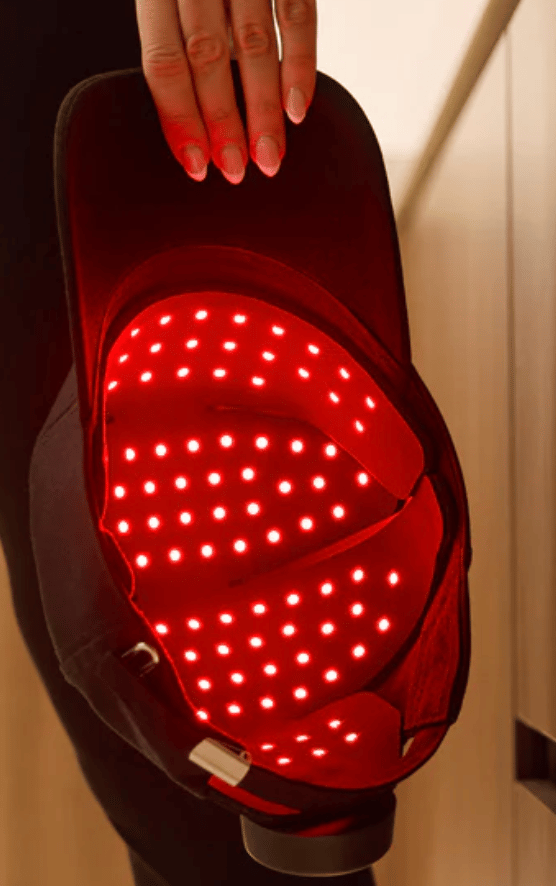
It uses clinically studied 650-nanometer red light, delivered through 125 LEDs, to support healthier-looking, fuller hair by working at the scalp level—where hair growth actually begins. Red light therapy has been shown to support follicle activity and hair density by helping cells function more efficiently over time.
What I appreciate most is how simple it is. Put on the cap, press one button, and relax for 10 minutes a day. It’s lightweight, hands-free, and automatically shuts off, so you can wear it while reading, answering emails, or winding down at night. No chemicals. No mess. No appointments. Just a consistent, science-backed ritual that fits into real life.
If you’re already investing in sleep, nutrition, and recovery, this is a natural extension—low effort, high alignment.
For the next 48 hours only, BON CHARGE is offering 25% off their Red Light Cap. Use code TRYTHIS25 at checkout to give your hair (and your scalp) the support they deserve.
Key Findings of the Coffee Study
The Brazilian research team looked at coffee consumption patterns and coronary artery calcium scores across their population. They controlled for all the usual suspects: age, sex, education, physical activity, diet quality, blood pressure, cholesterol levels, and more.
The dose-response relationship:
≤1 cup/day: 15 percent lower odds of calcification (not statistically significant)
1–3 cups/day: 27 percent lower odds of calcification
3+ cups/day: 67 percent lower odds of calcification (highly significant)
But here's the critical nuance: This protective effect was only seen in people who had never smoked.
Among current and former smokers, coffee consumption showed no association with coronary calcification, positive or negative. The damage from smoking appears to overwhelm any cardiovascular benefit coffee might offer, which, of course, makes sense.
Why Coffee Protects Your Arteries
The researchers point to several mechanisms:
Powerful antioxidants. Coffee is loaded with chlorogenic acids and other polyphenolic compounds. These aren't just theoretical antioxidants; they've been shown in human studies to reduce inflammation markers (IL-6, TNF-α, CRP), prevent LDL cholesterol oxidation, improve endothelial function and nitric oxide availability, and reduce platelet aggregation and clotting risk.
Here are some other benefits of coffee consumption:
Improved insulin sensitivity. Regular coffee consumption is consistently associated with lower type 2 diabetes risk. Better glucose control means less glycation damage to arterial walls.
Reduced systemic inflammation. Despite caffeine's acute effects on blood pressure, habitual coffee drinkers show lower chronic inflammation—a key driver of atherosclerosis.
Important caveat: Most of these benefits come from filtered coffee. Unfiltered coffee (French press, espresso, Turkish coffee) contains diterpenes (cafestol and kahweol) that actually raise LDL cholesterol. The paper filter removes these while keeping the beneficial polyphenols.
How I Personalized This Research for Myself
When I saw this study, my first thought was: "This is population-level data. What does it mean for ME specifically?"
I recently uploaded my raw 23andMe genetic data to Claude AI (similar to ChatGPT) and asked it to analyze variants related to caffeine metabolism and cardiovascular health. Within minutes, it reminded me that I'm a slow caffeine metabolizer and I should be mindful of over consuming coffee.
I have the CC variant of the CYP1A2 gene, meaning my liver breaks down caffeine at about 40 percent the speed of fast metabolizers.
This matters because in slow metabolizers, the same coffee that protects fast metabolizers can increase cardiovascular risk.
Studies show that at 2–3 cups per day, slow metabolizers have 36 percent higher heart attack risk, not lower.
The caffeine circulates for 6–8+ hours instead of 3–4, creating prolonged blood pressure elevation, sustained cortisol (which increases cholesterol production), and elevated homocysteine levels.
Combined with other genetic factors—I'm a cholesterol hyper-absorber, I have one APOE ε4 allele, and I carry an MTHFR variant—excess caffeine most likely works against my cardiovascular health goals.
So while the Brazilian study shows benefits at >3 cups/day for the general population, my personal protocol is 1–2 cups maximum, always before 10:00 a.m., and mostly filtered to remove excess diterpenes.
Intuitively, I've always known that too much coffee doesn't feel good for me. I didn't drink coffee growing up or even in college. I only got into it about 12-14 years ago when I moved to LA, and even then, one cup (sometimes two) was plenty to give me that extra feel-good boost. Any more, and I'd always feel a little unfocused and anxious, and my sleep wouldn't be great.
You know your body best, so always pay attention to the feedback it gives you.
Do you get anxious or jittery after drinking coffee? Does your heart rate stay elevated for hours? Does coffee destroy your sleep? If so, limit it or skip it!
Here are some other general rules that have helped me around coffee consumption:
I mostly drink filtered coffee, especially because my LDL is high. Paper filters remove the cholesterol-raising compounds while keeping beneficial antioxidants.
I cut myself off after 12 noon. Anything that disrupts sleep comes with its own cardiovascular risk.
Use AI to understand more about your body’s response to coffee. If you have 23andMe, AncestryDNA, or other genetic testing data, you can upload your raw data file to ChatGPT or Claude and ask: "What can you tell me about my caffeine metabolism genes (CYP1A2)?" Yes, I know AI isn't perfect, and sometimes it hallucinates, but it's getting so much better.
The Bottom Line
Now this is a well-done study, but it is important to remember that this study shows association, not causation. Coffee drinkers had healthier arteries, but we can't be 100 percent certain it was the coffee.
The good news? Coffee is enjoyable, it’s widely consumed, it's the largest source of polyphenols in the American diet (a little saddening), and it now has even more evidence supporting its safety and potential benefits.
But the foundation of cardiovascular health remains:
Regular exercise (especially zone 2 cardio)
Sleep quality (7–9 hours/night)
Stress management
Whole-food nutrition
Not smoking (obviously)
Maintaining a healthy weight and metabolic markers
Coffee can be part of a healthy lifestyle, but it's not a substitute for the fundamentals.
Individual responses vary based on genetics, existing health conditions, and how you metabolize caffeine.
The key is paying attention to how YOUR body responds and adjusting accordingly.
Population averages are a starting point. Personalization is where real optimization happens.
Here's to your health,
Dhru
What did you think about today's email? |
The information in this newsletter is for educational purposes only and should not be construed as medical advice; please consult a qualified healthcare professional before making any health-related decisions.