- Try This
- Posts
- Try This – 4 Big Shares for the Week
Try This – 4 Big Shares for the Week

Dhru Purohit
April 03, 2026
Try This community, today I have some great shares for you.
High level:
1. A product I’m loving (if you’re picky about water, you’ll love this one!)
2. This popular biohack is catching the attention of scientists
3. Simple health advice (for a wellness-confused world)
4. A powerful way to support a lower heart rate at night
Let’s get into it.
Shout Out to Our Sponsor Fatty15 Who Helps Keep This Newsletter Free
Most people focus on symptoms. But health starts one level deeper. It starts in your cells. And right now, your cells are under constant attack from aging, inflammation, and environmental toxins. That’s where Fatty15 comes in.
Fatty15 is a science-backed, award-winning supplement made with pure C15:0. This essential nutrient helps repair age-related cellular damage, boost mitochondrial function, and defend your cells from oxidative stress. The result is more energy, deeper sleep, improved mood, a stronger metabolism, and greater overall resilience.
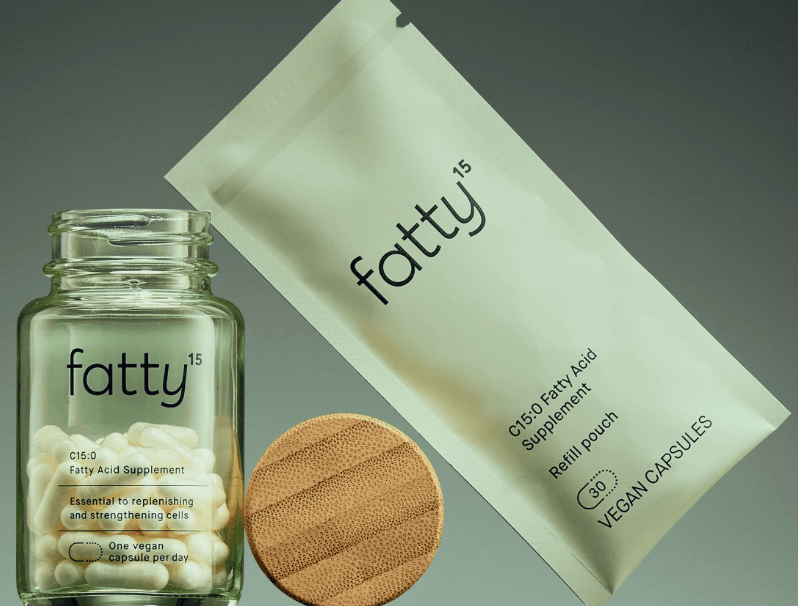
C15:0 supports multiple systems in the body, including the brain, heart, liver, immune system, and metabolic health. Many users also report smoother joint function, healthier skin and hair, and a renewed sense of vitality.
Fatty15 contains no fillers, flavors, allergens, or preservatives; just one clean, vegan-friendly ingredient: C15:0. If you’re ready to support your long-term health from the inside out, starting at the cellular level, now is the time.
Fatty15 is on a mission to replenish your C15 levels and restore your long-term health. You can get an additional 15% off their 90-day subscription Starter Kit by going to fatty15.com/DHRU and using the code TRYTHIS at checkout!
Number 1: Product I’m Loving: A Better Bottled Water
A friend of mine, Ari, recently told me about this new water brand (Loonen), and I got a chance to try it. I have to say, I’m impressed. Even though I use a reverse osmosis filter at home, I still keep bottled water in my office for podcast guests, and I’ve been on the hunt for something I actually feel good about serving. That search really picked up after I came across some questionable data around the quality of certain legacy spring-water brands (like Mountain Valley Water) that I used to trust.
Loonen’s level of transparency and testing is really awesome. They source from protected mountain springs in California, and they test every single batch for over 300 contaminants, including forever chemicals, heavy metals, and even microplastics, with third-party verification and results you can actually access.
They also bottle exclusively in glass, which matters more than most people realize when it comes to limiting plastic exposure.
Right now, they’re mostly available on Amazon, and price-wise it’s pretty comparable to other premium glass-bottled spring waters—maybe a little more, but for the added testing and peace of mind, I think it’s worth it.
Big bonus: They also have a sparkling version with the same purity standards. If you’re picky about water, this is a really cool brand to check out. (FYI, I have no affiliation with this company.)
Number 2: Is Red-Light Therapy Worth the Hype?
I just came across this article, and it caught my attention because publications like Nature don’t talk about things like red-light therapy or “trending” biohacks.
I personally use a lot of red-light therapy devices in my life, and both my wife and I have noticed a difference after experimenting with red light. But I know there’s also a lot of skepticism about it out there.
But it seems like science is finally starting to catch up.
The authors of this article explain that red and near-infrared light appear to interact with your mitochondria, helping support ATP production, circulation, and cellular repair.
That might help explain why researchers are now seeing benefits in areas like wound healing, nerve health, eye health, and even certain neurological conditions. Some of these applications are already being used in clinical settings, which is a big shift from where this conversation was just a few years ago.
But here’s the nuance: These devices are not a cure-all. Not every at-home device has been rigorously tested, and not every claim you see on social media is backed by strong evidence.
What is clear is that light (especially wavelengths we historically got from the sun) isn’t just something we see. It’s something our biology responds to. And in today’s indoor, screen-heavy world, we’re likely getting less of those beneficial wavelengths than ever before.
So while red-light therapy isn’t a magic bullet, it’s an area of research I’m paying closer attention to and will continue to personally use.
Number 3: Simple Health Advice That Makes the Biggest Difference
There’s so much noise in the health space right now—new protocols, new supplements, new “must-do” routines every week. That’s why I loved this recent thread from author Bill Gifford. It’s such a powerful reminder to come back to the basics.


I got a chance to talk about some of this with Bill—specifically, the power of sauna and his new book, Hotwired—on my podcast, and I can’t wait to share that episode with you. Stay tuned.
Number 4: Can Sauna Use Help Lower Nighttime Heart Rate?
Speaking of sauna, I’ve been doubling down on my own routine lately, especially because the gym I go to has this beautiful barrel sauna on the rooftop. I’ve started using it as a way to catch up with friends, too, which has been such a simple upgrade: heat, conversation, and connection all in one.
What’s interesting is that we’re starting to get more real-world data on what sauna is actually doing in the body.
The team at Terra recently analyzed tens of thousands of days of wearable data across 256 users, comparing sauna days vs. non-sauna days. And what they found was pretty remarkable: On sauna days, nighttime heart rate dropped by about three beats per minute—roughly a 5 percent decrease.
That’s not trivial. Lower nighttime heart rate is generally a sign that your body is shifting into a more parasympathetic, recovery-focused state.
Even more interesting, this effect held even after accounting for exercise, meaning it wasn’t just because people worked out harder on sauna days.
There was also a nuance for women: The benefit was strongest during the luteal phase of the menstrual cycle, which is great because it’s an extra tool women can use during what can sometimes be a more challenging time of the menstrual cycle.
Turns out, sauna use could be super powerful for nervous system recovery.
See you next week for more shares.
Much love,
Dhru Purohit
What did you think about today's email? |
The information in this newsletter is for educational purposes only and should not be construed as medical advice; please consult a qualified healthcare professional before making any health-related decisions.