- Try This
- Posts
- Try This – 3 Ways to Protect Yourself from EMFs
Try This – 3 Ways to Protect Yourself from EMFs
Simple strategies inside

Dhru Purohit
January 16, 2026
Try This community, last week I read a really fascinating article about football and electromagnetic radiation that was pretty wild!
And its findings just might make you think twice about how you protect yourself from invisible toxins in your own home!
Okay, so back to this wild article…
It was actually a well-thought-out deep dive exploring the idea that chronic exposure to extremely low‑frequency (ELF) electromagnetic fields (EMFs) from a power substation near the San Francisco 49ers’ practice facility might be contributing to the team’s UNUSUALLY high rate of injury. 🤯
Look, we can’t completely get rid of EMFs, but there are a few things we can do to mitigate their impact. And that’s what I’m getting into today.
Here are three ways to protect yourself and your loved ones from EMF exposure.
Shout Out to Our Sponsor LMNT Who Helps Keep This Newsletter Free
New Year habits don’t have to be complicated to be effective. One habit I keep coming back to is hydration, and LMNT makes it easy.
And hydration isn’t just about drinking more water. When we sweat, breathe, exercise, or spend time in the sauna, we lose electrolytes that plain water can’t replace. Without the right minerals, energy dips, focus drops, and recovery slows.
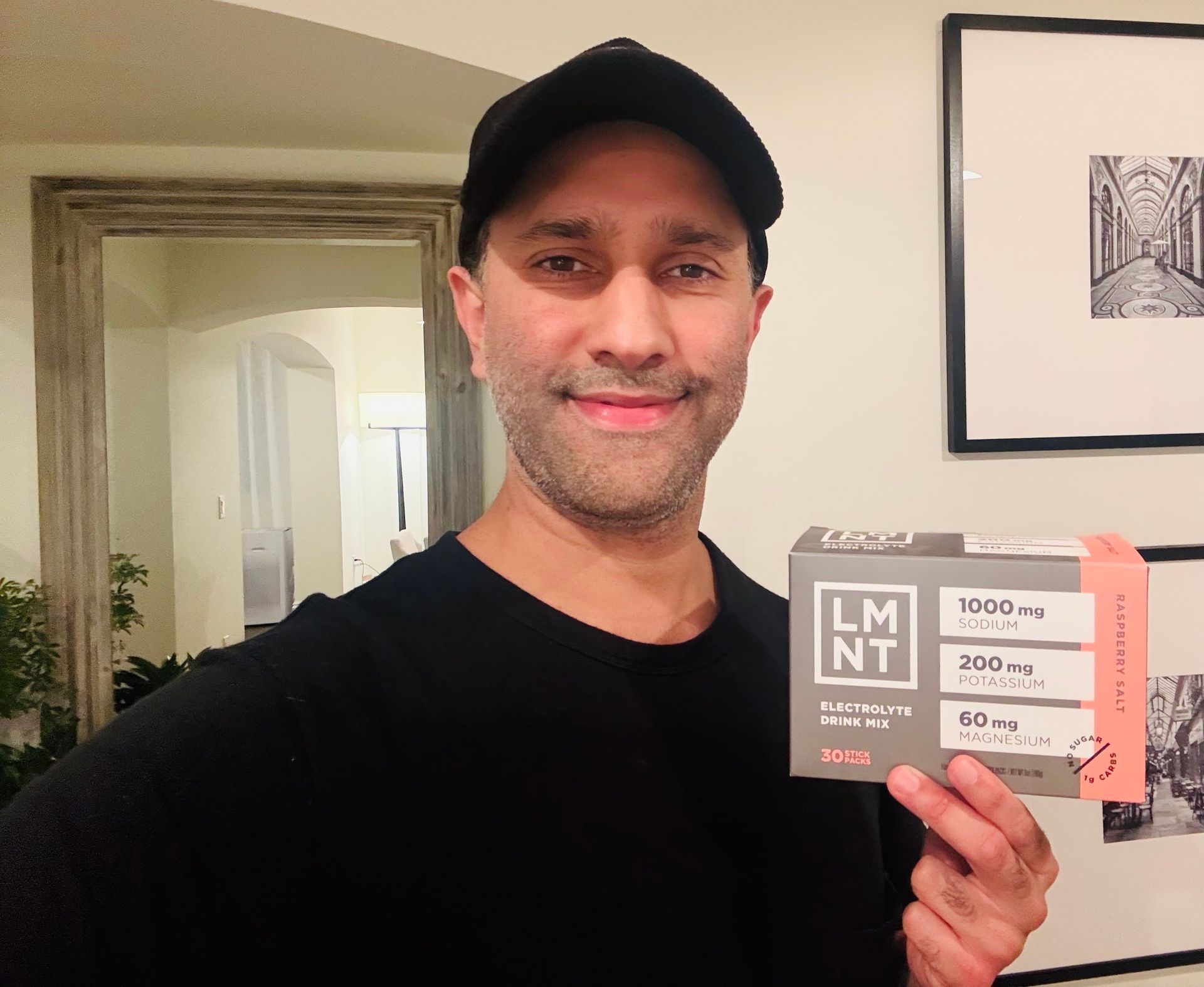
That’s why I keep LMNT on hand. It’s a clean electrolyte mix with sodium, potassium, and magnesium in evidence-based ratios and zero sugar. When I use LMNT, my energy stays steadier throughout the day, my workouts feel better, and my mind stays clearer without relying on extra caffeine.
My everyday go-to flavors are Raspberry Salt and Orange Salt. They’re simple, salty, and genuinely enjoyable. LMNT is offering my community a FREE sample pack with any purchase, so you can try all 8 of their flavors for yourself or share them with a salty friend.
Could EMFs Worsen Injuries? A Little Background
First, if you want to read more about this fascinating—and frightening—hypothesis, here’s the Substack article by Peter Cowan that dives deep into the topic.

Here’s the gist: Since moving into Levi’s Stadium in 2014, the 49ers have consistently ranked among the most-injured NFL teams and have had an unusually high number of catastrophic soft‑tissue failures like Achilles and patellar tendon ruptures, high‑grade hamstring tears, and other collagen‑rich injuries. A former player even joked that the nearby electrical substation might be to blame, which led Peter to actually measure magnetic field levels near the facility. Those measurements were higher than typical background levels found in homes or offices, suggesting chronic, unavoidable exposure to ELF magnetic fields in the practice environment.
The article argues that conventional safety standards, which only consider thermal effects (i.e., heating) from EMFs, ignore a growing body of research on nonthermal effects and the possibility that prolonged exposure to low‑level fields might disrupt biological processes like collagen integrity, mitochondrial function, and cellular repair, potentially making tendons and ligaments more vulnerable to injury under physical stress.
Honestly, even though it's all a theory, it seems totally possible to me. I personally take EMF exposure seriously because even though we don’t have all the answers, I don’t want to take any chances. Why not protect myself and my family?
So, here’s what I’ve done:
Number 1: Don’t Plug Things In Next to Your Head (Especially at Night)
If you’re worried about EMF exposure, this is the first thing I would change!
Like most people, I used to charge my phone on my nightstand while I slept. I’ve since hired multiple building biology professionals to measure EMFs in my home using voltage meters and other EMF instruments.
What surprised me most was learning that some of the highest nighttime exposure near the bed wasn’t coming from Wi-Fi. It was coming from AC electric fields created by plugged-in cords.
Here’s the part most people don’t realize. Even when a lamp, phone charger, or alarm clock is turned off, the cord still carries live voltage. That voltage creates an electric field that radiates into the bed if the cord is close enough. You do not need current to flow for this exposure to exist.
When you sleep, your nervous system downshifts, melatonin is released, and repair processes happen. According to building biology standards, electric field exposure matters most at night for this reason. The professional who visited my house recommended that anything plugged in should stay at least 4–6 feet away from my head while I’m sleeping—or fully disconnected.
This part is inconvenient. I can’t just turn off my night-light anymore; I have to unplug it. But I watched the voltage and electric field readings drop immediately when I did. Seeing the numbers change in real time made it hard to ignore.
Number 2: Keep Your Phone on Airplane Mode (Turn Bluetooth Off)
If you’re at home, at your office, or anywhere with reliable Wi-Fi, put your phone on airplane mode and turn Bluetooth off.
I learned this while having radio frequency exposure measured in my home. In a smartphone, the cellular antenna is typically the biggest source of RF radiation, not Wi-Fi.
Exposure spikes especially when:
The signal strength is low
The phone is actively sending or receiving data
The phone is close to your body, like in a pocket or bra or under your pillow
When cellular is on, your phone is constantly communicating with distant towers and adjusting its power output to maintain a connection. Turning cellular off while keeping Wi-Fi on dramatically lowers overall exposure because Wi-Fi operates at much lower power and connects to a nearby router instead of a faraway tower.
You still get internet access for things like messaging, streaming, and email, without the higher RF load that comes from 4G or 5G.
Also, don’t forget to turn Bluetooth off when you are not using it. Bluetooth transmits RF signals, as well, even when nothing is connected.
Note: A lot of my friends prefer to turn their Wi-Fi off at night and keep their phone’s cellular service on while keeping their devices far away from the bed, sometimes in another room. I’m totally supportive of that approach too.
Number 3: Use a Grounding Mat
All right, I know this one might sound a little woo-woo, but I’ve tested this firsthand and was genuinely surprised by the difference.
Grounding sheets, also called earthing sheets, are bed sheets or mats with conductive threads, typically silver or carbon, that connect to the ground port of an electrical outlet or a grounding rod outside. The idea is to simulate direct skin contact with the Earth. It’s like walking barefoot on grass or sand, but while you sleep.
The idea is that the Earth’s surface carries a mild negative electrical charge, and grounding allows the body to equalize with it. Modern life keeps us largely insulated from this, with rubber-soled shoes, buildings, and electronics everywhere, so some believe grounding may lower body voltage and influence stress or inflammatory processes.
I have definitely seen the proof myself and will continue to use a grounding mat while I sleep. Here’s the one I got from Amazon (no affiliation).
Number 4: (BONUS): If You Have an Electric Car…
Some of the highest EMF levels I’ve personally seen measured were inside electric cars while they were actively charging at a supercharger or fast charger. I own two EVs, and after seeing the data, I avoid sitting in them during charging whenever I can.
Fast-charging and supercharging push very high electrical currents through the car’s systems. High current creates stronger magnetic fields, and those fields can spike inside the cabin while the battery is under heavy load. That’s where the exposure jumps.
It’s worth saying this clearly: All cars emit EMFs, not just EVs. Gas and hybrid cars do too. The building biology professionals I’ve worked with have been consistent on this point. The biggest issue is not normal driving in an EV. It’s fast-charging while sitting in the car that creates the most avoidable exposure.
I get it—sometimes you have no choice. Safety comes first. But if you’re charging at home or at a public charger and it’s safe to do so, step out of the car and take a short walk.
I’m constantly testing and adjusting how I reduce EMF exposure in my own life. These are a few of the changes that have made the biggest difference for me so far. I’ll keep sharing what I learn as I go, and I hope you experiment with what works for you, too.
Much love,
Dhru Purohit
What did you think about today's email? |
The information in this newsletter is for educational purposes only and should not be construed as medical advice; please consult a qualified healthcare professional before making any health-related decisions.