- Try This
- Posts
- New Study: The Mindset That Improves Brain Age
New Study: The Mindset That Improves Brain Age

Dhru Purohit
March 16, 2026
Most of society has absorbed a pretty grim picture of what aging looks like.
Memory starts to go. The body slows down. You manage the decline as best you can.
It is so deeply baked into our culture that, get this...
80% of lay people and 65% of healthcare professionals believe all older adults eventually develop dementia.
A separate survey found 77% of Americans over 40 expect their own cognition to slip.
Most people do not just fear aging. They expect decline. And society calls that "facing reality."
But a new 12-year study out of Yale just put a massive dent in that story.
Here is the sneak peek.
Nearly half of older adults in this groundbreaking study did not decline at all.
They got better.
What did they do, and what can we learn from them?
More after a word from today's sponsor.
Shout Out to Our Sponsor BiOptimizers Who Helps Keep This Newsletter Free
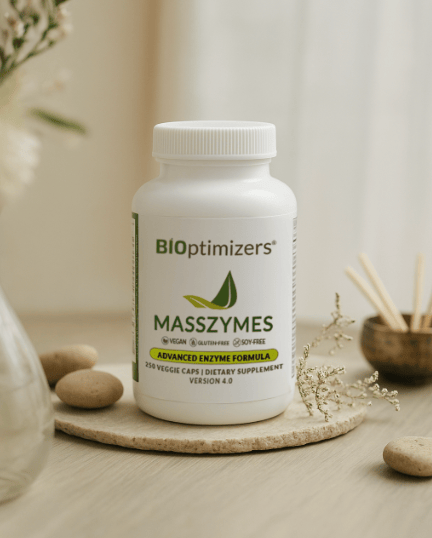
Bloating, heaviness, or that “food just sitting there” feeling isn’t always about what you ate; it’s often about what your body can’t fully break down.
You can eat clean, organic, high-protein meals… and still struggle with digestion.
Here’s why: as we age, our natural production of digestive enzymes can decline, especially protease, the enzyme responsible for breaking down protein. When enzymes are low, food doesn’t break down efficiently, which can lead to discomfort and reduced nutrient absorption over time.
That’s why MassZymes from BIOptimizers have been a staple in my routine for years.
MassZymes is in a class of its own:
🌱 Full-spectrum blend with 18 enzymes to break down proteins, carbs, fats, starches, and fiber
💪 High levels of protease to support protein digestion and muscle recovery
⚡ Supports better nutrient absorption for energy and metabolism
😌 Helps reduce bloating and that heavy post-meal feeling
If you’re investing in high-quality food and strength training, it makes sense to support the system that processes it. And the best part? BIOptimizers backs it with a 365-day money-back guarantee, so you can try it completely risk-free.
BiOptimizers is offering my community 15% off select products and bundles by using the code DHRU at checkout. Just CLICK HERE and use promo code DHRU to get your digestion back on track with MassZymes.
The Problem with Research on Aging
For decades, aging research has operated on a pretty fixed assumption.
Older adults decline. The only question is how fast. That belief is so embedded in science that even the WHO's standard assessment tool for measuring cognitive and physical health in later life does not include improvement as a possible outcome. If an older adult gets better, the tool literally cannot capture it.
Dr. Becca Levy at Yale thought that was a problem.
After years of research showing that what people believe about aging shapes their health outcomes, she wanted to ask a question the field had largely ignored: what if a meaningful number of older adults actually improve over time? And what if we have been missing it because we were not looking for it?
So her team designed a study that could actually measure improvement.
They followed more than 11,000 Americans aged 65 and older for up to 12 years, tracking two straightforward things: how well they could think and how well they could move.
And the data confirmed what she suspected.
Nearly half of participants had not declined at all. They had actually improved.
Not held steady. Not declined more slowly than average. Improved.
About 1 in 3 were sharper cognitively than when they started. About 1 in 4 were physically faster and more capable. Most of those gains were large enough to be considered clinically meaningful, not just statistical noise.
And these were not extraordinary people. No special programs, no elite backgrounds. Regular older Americans from a nationally representative study.
Which immediately raises the obvious question: what predicted who improved?
So, What Predicted Who Got Better?
The researchers dug into this carefully. They looked at a wide range of factors: health status, age, education, depression, and chronic disease.
But one factor rose clearly above the rest.
It was their beliefs about aging.
People who held more positive beliefs about getting older were significantly more likely to improve in both cognitive and physical function, compared to those who held more negative views.
In other words, people who believed that aging could still include growth, learning, and vitality were more likely to actually experience those outcomes.
This was not a surprise to Dr. Levy. It was exactly what her decades of prior research had been pointing toward. This study was built to confirm it at scale.
Why Does a Belief Change Your Biology?
This is the part that might feel surprising. So let me walk through how it actually works.
Dr. Levy's framework is called Stereotype Embodiment Theory.
The core idea is this: from a very young age, we absorb messages about what aging looks like. Through advertisements. Through the way older people are portrayed in movies and TV. Through the casual way people talk about getting old.
And when we enter later life, those absorbed beliefs become self-relevant. They stop being about other people and start being about us. That shift is when they begin to affect our biology.
Her previous research had already found that negative age beliefs predicted poorer memory, slower walking speed, higher cardiovascular risk, and even biological markers associated with Alzheimer's disease.
This new study shows the other side. Positive age beliefs actively predict improvement.
This Is Not Just About Mindset
I want to be careful here, because "think positive about aging" can sound like wellness fluff.
This is not that.
Our beliefs shape our behaviors. People who view aging positively are more likely to stay active, engage socially, keep learning, and keep investing in their health. Those behaviors compound over time into measurably better outcomes.
And beliefs can also influence physiology directly. Previous research has linked positive age beliefs to lower stress responses, healthier cardiovascular profiles, and better recovery from illness.
The researchers call this a self-fulfilling biology.
Expect decline, and your behaviors and stress responses slowly move you in that direction. Expect growth and adaptation, and your lifestyle and biology can move differently.
Negative age beliefs do not just make people feel worse. They make people give up on things that actually work.
This is why I am a huge fan of actively seeking out examples of people thriving in their 60s, 70s, and 80s. Not as rare exceptions. As a realistic template for what is actually possible.
Pay attention to how you talk about getting older, to yourself, and to others.
Language shapes belief. And belief, it turns out, shapes biology.
One last thing. We have so much to learn from older folks, but they also have a lot to gain from spending time with younger people: a youthful mindset, more physical activity, etc. If you have aging parents, encourage them to spend time with younger people since this will help shift how they view their own aging. In other words, spend time with people who “keep you young!”
Much love,
Dhru Purohit
What did you think about today's email? |
The information in this newsletter is for educational purposes only and should not be construed as medical advice; please consult a qualified healthcare professional before making any health-related decisions.